
We all know brushing and flossing are key to a healthy smile, serving as essential practices that help maintain the health of our teeth and gums. However, sometimes, well-intentioned habits can backfire—if done incorrectly, leading to unexpected problems like cavities or gum disease. In this post, let’s unpack common dental hygiene mistakes many people make, such as brushing too hard or neglecting to replace their toothbrush regularly, why they’re harmful, and how to fix them effectively. By addressing these common pitfalls, we can ensure that our dental care routine not only helps us achieve a brighter smile but also supports overall oral health in the long run.
Why Oral Health Matters for Overall Health
Your mouth is not an isolated system — poor oral health has links to systemic conditions. For example, gum disease has been associated with diabetes, heart disease, adverse pregnancy outcomes, and more.
According to the U.S. Department of Health and Human Services’ oral health guidelines, most oral diseases are preventable with good hygiene and regular dentist visits.
Given the stakes, minimizing these hygiene mistakes is vital not just for your smile but for your overall wellbeing.
Top 7 Dental Hygiene Mistakes to Avoid for Better Oral Health
Maintaining good oral health is crucial for overall well-being, yet many people unknowingly make common dental hygiene mistakes that can lead to serious problems. One of the most frequent errors is not brushing long enough or effectively, which can result in plaque buildup and cavities. Additionally, skipping flossing can allow food particles to remain between teeth, promoting gum disease. Using the wrong toothbrush or not replacing it regularly is another issue, as a worn-out brush can fail to clean effectively. It’s also essential to avoid aggressive brushing, which can damage gums and enamel.
Furthermore, neglecting regular dental check-ups leads to missed opportunities for early intervention. Lastly, poor dietary choices, such as excessive sugary snacks and drinks, can significantly impact oral health. By being aware of and correcting these mistakes, individuals can enhance their dental hygiene and maintain a brighter, healthier smile.
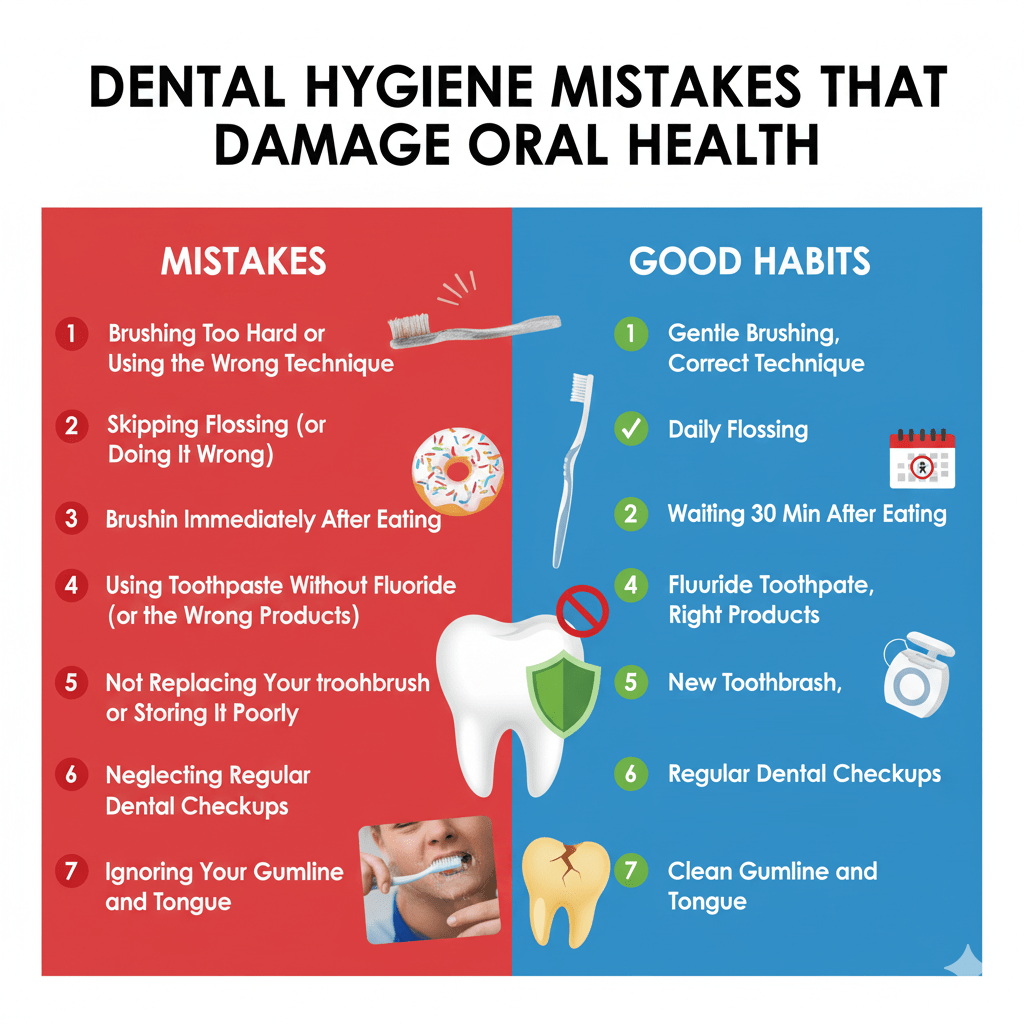
1. Brushing Too Hard or Using the Wrong Technique
You might think scrubbing your teeth vigorously gives you a “deep clean,” but it’s actually one of the most harmful habits. Excessive force or aggressive brushing can wear away enamel and irritate gums, leading to gum recession and tooth sensitivity.
Using a stiff-bristled toothbrush or a horizontal scrubbing motion increases the risk. The better method is to use a soft-bristled brush, hold it at a 45° angle to the gumline, and move in gentle circular or short strokes.
2. Skipping Flossing (or Doing It Wrong)
Brushing only tackles three sides of a tooth (front, back, and biting surface). The tight spots between your teeth and just under the gumline often hide plaque and food debris. That’s why flossing is essential.
However, flossing incorrectly—snapping it harshly between teeth or pulling down into the gums—can injure soft gum tissues. Also, skipping it entirely leaves bacteria to accumulate, increasing the risk of cavities and gum disease.
3. Brushing Immediately After Eating
You may feel like “getting food off your teeth now” is smart—but brushing right after meals (especially acidic or sugary ones) can actually damage enamel. Acid softens enamel temporarily, and brushing in that softened state can erode it further.
A safer routine: wait 20–30 minutes after eating to brush, or at minimum rinse your mouth with water or chew sugar-free gum to neutralize acids first.
4. Using Toothpaste Without Fluoride (or the Wrong Products)
Fluoride is proven to help strengthen enamel and prevent decay. If your toothpaste lacks fluoride or you switch to a non-fluoride formulation without good reason, you may weaken your defenses against cavities.
Likewise, some over-the-counter products, mouthwashes, or whitening agents may have high abrasivity, strong alcohol, or harsh chemicals that irritate gums or enamel.
5. Not Replacing Your Toothbrush or Storing It Poorly
A worn or frayed toothbrush loses cleaning effectiveness. Also, it becomes a breeding ground for bacteria. Many authorities recommend replacing the brush (or brush head, for an electric toothbrush) about every 3 to 4 months—or sooner if the bristles show wear.
Additionally, storing your brush in a cramped drawer or covered container prevents it from drying properly, inviting microbial growth. Instead, keep it upright in an open area so it can air-dry.
6. Neglecting Regular Dental Checkups
No matter how diligent your home care, some dental issues develop beneath the surface—beneath gums or between roots. Skipping your periodic dental visits means missing the chance to catch and correct problems early.
A professional cleaning also removes hardened tartar (which brushing cannot) and helps maintain gum health.
7. Ignoring Your Gumline and Tongue
Plaque often accumulates close to where gums meet teeth. If your brushing doesn’t target that junction, it leaves bacteria behind, gradually contributing to gingivitis. Similarly, your tongue harbors bacteria that contribute to bad breath and tooth decay if left uncared for.
Use your brush or a tongue scraper gently across your tongue (especially the middle and back) to reduce bacterial load.
How to Do It Right: A Simple Daily Plan
Here’s a plain and realistic oral care routine you can follow:
- Brush twice a day, spending a full two minutes each time, with a soft-bristled brush.
- Floss once daily, before brushing, using gentle motions and letting the floss curve around each tooth.
- Wait before brushing after meals — rinse or chew gum first if needed.
- Choose a fluoride toothpaste and avoid overly abrasive or harsh products.
- Replace your brush (or head) every 3–4 months and store it upright to dry.
- Clean your tongue daily with your brush or a scraper.
- Visit your dentist every 6 months (or as advised), even if nothing seems wrong.
Why the Right Dental Clinic Matters
Even with perfect daily habits, sometimes you need professional support. That’s where a trustworthy clinic plays a key role. If you’re in Faisalabad (or nearby), choosing the best dental clinic in Faisalabad becomes crucial—not just for treatments, but also for preventive guidance, early detection, and personalized advice.
One example is Health360 which offers integrated dental care, modern equipment, and a patient-friendly approach. Linking your readers to a reliable local service like that can help them take action immediately.
Expert Tip: Use a timer (or a two-minute song) each time you brush to avoid rushing. And once a week, do a “slow brush check” — see if you’re brushing too hard or skipping tricky spots. Combine that with a semiannual dental checkup, and you’re giving your smile its best defense.
If you found this useful, feel free to share — someone else’s teeth will thank you!
 Daily Heath Wire
Leave a comment